

Celebrate the holiday season and special occasions with this easy, elegant, melt-in-your-mouth slow-roasted beef tenderloin. You’ll slow roast, reverse-sear your way to an ultra-tender, perfectly medium-rare tenderloin with a flavorful brown crust your guests will rave about.

Here's the Gist
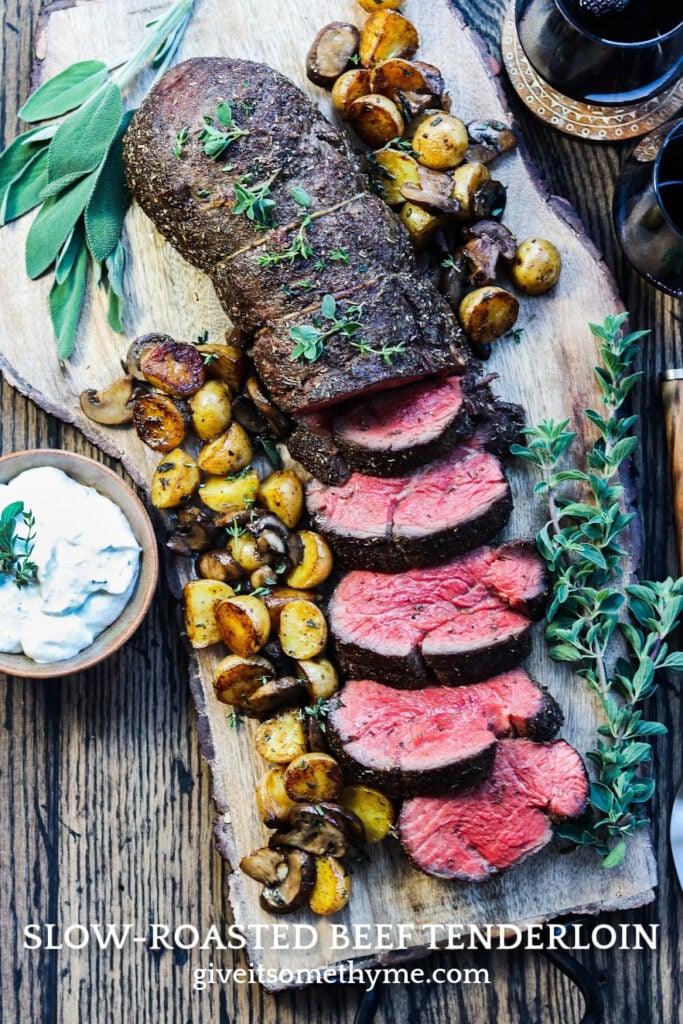
- What it is: A show-stopping entrée for any special occasion that will impress your guests without the stress.
- Why You'll Love It: Slow roasting beef is a low-stress way to ensure delicious, perfectly cooked tenderloin you can make ahead.
- How to Make It: Dry brine the beef with a mixture of herbs and spices, roast slowly in the oven then quickly sear on the stove.
Why Slow-Roasting Beef Tenderloin Works So Well
Buying an expensive cut of meat can be intimidating because the last thing you want to do is screw up Christmas dinner. Beef tenderloin is a lean cut so it can easily become dry when overcooked.
But this low-and-slow method safeguards against overcooking. It’s much less stress than high-heat roasting, resulting in a juicier texture and perfectly even edge-to-edge doneness every time.
Excellent recipe. Simple to follow and beef came out perfect medium rare.
~ CAE
Jump to:
- Here's the Gist
- Why Slow-Roasting Beef Tenderloin Works So Well
- Ingredients
- Cooking Instructions
- Resting & Slicing Beef Tenderloin
- Pro Tips for Flawless Beef Tenderloin
- Make-Ahead, Storage & Reheating Tips
- Best Sauces for Slow-Roasted Beef Tenderloin
- Slow-Roasted Beef Tenderloin FAQs
- Related Posts
- 📋 Recipe
- Slow Roasted Whole Beef Tenderloin
- 💬 Comments
Ingredients

Whole Beef Tenderloin – Be sure to go to a quality market and figure 6-8 ounces per person. Whole tenderloins are typically 4-6 pounds, serving 8-12 people. When having a smaller crowd, look for the smaller center-cut beef tenderloin, known as chateaubriand.
Seasoning – Generously seasoned with a dry rub mixed in a small bowl of dried thyme, oregano, garlic powder, cumin, kosher salt and black pepper. Dried rosemary, sage, parsley, marjoram and paprika all work as well.
Fresh Herbs – Fresh rosemary, thyme, oregano and sage are tucked in the butcher’s twine for added flavor. Steer away from delicate herbs here like parsley, basil, chives or tarragon.
Olive Oil & Butter – Olive oil is used to coat the raw tenderloin so the dry rub will adhere better. If you don’t have olive oil, use whatever is in your pantry. Butter is used to sear the tenderloin after roasting, and it really is the perfect finishing touch of flavor.
Cooking Instructions
How to Prep Beef Tenderloin for Slow Roasting
Trim – Pat roast with paper towels and cut off any excess fat and silver skin with a sharp knife. Silver skin is a tough membrane that does not tenderize when cooked and it prevents seasoning from penetrating the meat. However, many stores have tenderloins where the silver skin is already removed.
Tying for even thickness – A whole tenderloin has a ‘rump’ end, then is even in the middle that tapers off to a point at the other end. It’s key to fold the tapered end underneath to create uniform thickness as best you can and tie with kitchen string every couple of inches to keep its shape.
How to Season – Brush olive oil on trimmed-and-tied tenderloin then rub in dried seasoning mixture. Less is more here, a few additional spices to salt and pepper will do the trick because you want the beef flavor to shine. Tuck a few fresh herbs in the twine then it’s time for the tenderloin to chill.
Dry brine beef tenderloin – When the tenderloin hangs out in the fridge overnight uncovered, the seasoned exterior dries, creating a crisp, flavored crust when roasted. If overnight isn’t an option for you, try for at least 4 hours.

Temperature & Timing
Preheat oven – Set your oven to 250 degrees F.
Roast – In a low and slow oven, this tenderloin took about one hour and thirty minutes. Remove beef from oven when a digital thermometer reaches 120 degrees. Between the carryover cooking and searing you’ll end up right around 130 degrees for perfectly medium-rare beef.
Sear – When your tenderloin is just about to come out of the oven, heat butter in a large skillet over medium-high heat. Sear on each side about 30 seconds for 2 minutes total.

Internal Temperature Guide
Here are temperature ranges depending on how you like your beef cooked:
- Rare: under 120 degrees F
- Medium-rare: 125 – 130 degrees F
- Medium: 135 – 140 degrees F
- Medium-well: 145 - 150 degrees F
- Over: If you end up above 150 degrees with a beef tenderloin, it’s an expensive oops.
Resting & Slicing Beef Tenderloin
It's crucial to rest beef tenderloin after cooking so the juices redistribute into the meat rather than run all over your cutting board. By resting the meat, carryover cooking brings it to your optimal temperature as well.
Tent with aluminum foil to keep it warm and don’t touch it for a good 10-15 minutes.
Once the meat has rested, it’s also important to slice beef against the grain for the most tender bite. Slicing this way shortens long muscle fibers to prevent long, stringy, chewy bites. Don’t ruin all your great cooking with bad slicing.😉

Pro Tips for Flawless Beef Tenderloin
These are tried and true tips learned after decades of cooking and entertaining:
- Don’t skip tying your tenderloin with kitchen twine to strive for uniform thickness to ensure even cooking, even when using a smaller center-cut tenderloin.
- Bring your tenderloin to room temperature before roasting. Depending on the size, take it out of the fridge 1 – 2 hours before roasting for best results.
- Use a rimmed baking sheet with a fitted wire rack if possible. This allows heat to circulate under the meat, so the bottom also develops an outside crust. You can also use vegetables like carrots, celery and onions to serve as a ‘rack’ then use those softened vegetables and juices to make a gravy.
- Resting red or white meat is imperative to the final dish. Time is on meat’s juicier side when it has time to redistribute, otherwise it ends up all over your counter. No fun in that!
- An instant-read thermometer is a must for determining the internal temperature of the tenderloin. There’s a link to a reliable and affordable one in the recipe card below.
Make-Ahead, Storage & Reheating Tips
We’ve all been crazed with planning the perfect menu for a special occasion and looking to keep last-minute dishes to a minimum. This is where make-ahead beef tenderloin saves the day.
I’ve found that going through this recipe’s steps (minus the slicing) the day before serving has been a game-changer. Not only is it less stress trying to time everything else on the menu, it checks a huge box: I know it’s perfect.
Once the tenderloin has cooled, wrap it whole in aluminum foil and refrigerate. On the day of serving, I like to slice it, place it into a casserole dish and simply pour hot beef broth over to reheat. I avoid reheating the beef in the oven so it doesn't overcook.
Best Sauces for Slow-Roasted Beef Tenderloin

One of my favorite sauces for beef tenderloin is this creamy, tangy horseradish sauce that’s included below, but here are some other sauces along with a roundup of dreamy side dishes to go with your tenderloin!
- Green Goddess Sauce
- Spinach Walnut Pesto
- Tzatziki Sauce
- Cilantro Pistachio Pesto
- Caramelized French Onion Dip (great on beef sandwiches too!)

Slow-Roasted Beef Tenderloin FAQs
Slow-roasting beef tenderloin takes about 25-35 minutes per pound at 250°F, depending on the tenderloin’s thickness and desired doneness. Always rely on its internal temperature with a trusted instant-read thermometer, not time alone, for best results.
Sear beef tenderloin after slow roasting. This reverse-sear method creates a flavorful crust without overcooking the interior. Searing before slow roasting can lead to uneven doneness.
Slow-roasted beef tenderloin won’t brown much in the oven because of the low temperature. This is normal. A quick, high-heat sear in a skillet or under the broiler after roasting adds color and flavor.
Beef tenderloin typically rises 5–10°F while resting. Remove it from the oven slightly below your target doneness to avoid overcooking. Resting also helps redistribute juices for cleaner slices.
Store any leftovers in an airtight container and refrigerate up to 4 days. You can turn them into crostini, sandwiches, baked Philly cheesesteak potatoes, or add to a stir fry. And you can enjoy an amazing steak and eggs breakfast the next day!
Related Posts


📋 Recipe
Slow Roasted Whole Beef Tenderloin
Ingredients
Beef Tenderloin
- 1 4-pound beef tenderloin, trimmed and tied
- 2 teaspoons kosher salt
- 1 teaspoon each of dried thyme, oregano, cumin, garlic powder and black pepper
- 2 tablespoons olive oil
- 10 fresh thyme sprigs
- 5 fresh rosemary sprigs
- 5 fresh oregano sprigs
- 5 sage leaves
- 4 tablespoons butter
Horseradish Cream Sauce
- ¾ cup cream cheese, room temperature
- ¼ cup whole milk
- 2 tablespoons prepared horseradish
- ½ tablespoon each of fresh oregano and thyme leaves
- 1 ½ teaspoons Dijon mustard
- ½ lemon, juiced
- Kosher salt and pepper
Instructions
Beef Tenderloin
- Preheat oven to 250 degrees F.
- Line a large, rimmed baking sheet pan with foil and set a roasting rack inside the pan.
- Fold the thin end underneath the thicker part to keep the tenderloin the same thickness as much as possible. Tie the meat with butcher’s twine in 1 to 2-inch intervals. Place tenderloin on prepared sheet pan.
- In a small bowl, whisk the salt, dried thyme, oregano, cumin, garlic powder and black pepper until combined.
- Evenly coat the tenderloin with olive oil.
- Rub the dried herb mixture all over the meat.
- Tuck bunches of the fresh herbs under the twine.
- Refrigerate tenderloin uncovered overnight or at least 4 hours. if possible. Remove from refrigerator 1-2 hours before roasting so it can come up to room temperature.
- Roast tenderloin in preheated oven until it reaches 120 degrees F, about 90 minutes for medium-rare. Rotate the pan halfway through cooking time. (Use an instant-read thermometer to check the tenderloin’s temperature after an hour to see where you are.)
- When you’ve reached desired doneness (see temperature ranges in Notes section), remove tenderloin from oven.
- Heat butter in a large skillet over medium-high heat.
- When butter has melted and begins to foam, add the tenderloin to the skillet and sear 30 seconds on each side, 2 minutes total. (If the tenderloin is too large for a skillet, you can broil each side for the same amount of time.)
- Tent the tenderloin with foil and let rest 10-15 minutes before slicing.
- Slice the beef crosswise against the grain at your preferred thickness.
- Serve tenderloin on a platter with roasted potatoes or other side dishes, and the Horseradish Cream Sauce. Enjoy!
Horseradish Cream Sauce
- Whisk all ingredients in a medium bowl until well combined. Season to taste with salt and pepper. (Can be made 3 days ahead. Cover and chill. Let sit at room temperature 30 minutes before serving.)
Notes
Degree of Doneness
You’re looking for 125 – 130 degrees F for medium-rare, 135 – 140 degrees F for medium, and 145 - 150 degrees F for medium-well. *See post for Recipe Tips and additional Sauce Suggestions.Nutrition
This page contains affiliate links. Meaning, whenever you purchase an item after clicking an Amazon link through this website, we receive a small percentage from Amazon. It doesn’t cost anything extra to you! It simply helps maintain the blog. Thanks so much!

Barbara says
So I am supposed to have the beef on a rack so it doesn’t sit in the juices?
Kim Peterson says
The bottom browns better when it's on a rack so the heat can circulate around the entire tenderloin for the most even cooking. But if you don't have one the beef will still be excellent.😊
Cindy Lee says
Yum! I cooked this in my sun oven and maybe left it in a bit too long, but even so it came out perrrfect and sooo delicious! Thank you so much 😉
Kim Peterson says
Thrilled you enjoyed it!😊
Ben | Havocinthekitchen says
Oooo this herbaceous Beef Tenderloin looks terrific and so perfectly cooked. Beautiful - magazine / cookbook - quality photos, too!
Kim Peterson says
Thanks so much Ben! It truly is a treat no one wants to screw up. Low and slow is the way to go!
Cae says
Excellent recipe. Simple to follow and beef came out perfect medium rare.
Kim Peterson says
Awesome! This is definitely my favorite way to prepare beef tenderloin. Happy Holidays!